Arcondec editorial · 19 / 10 / 2026
AI changes data centre cooling
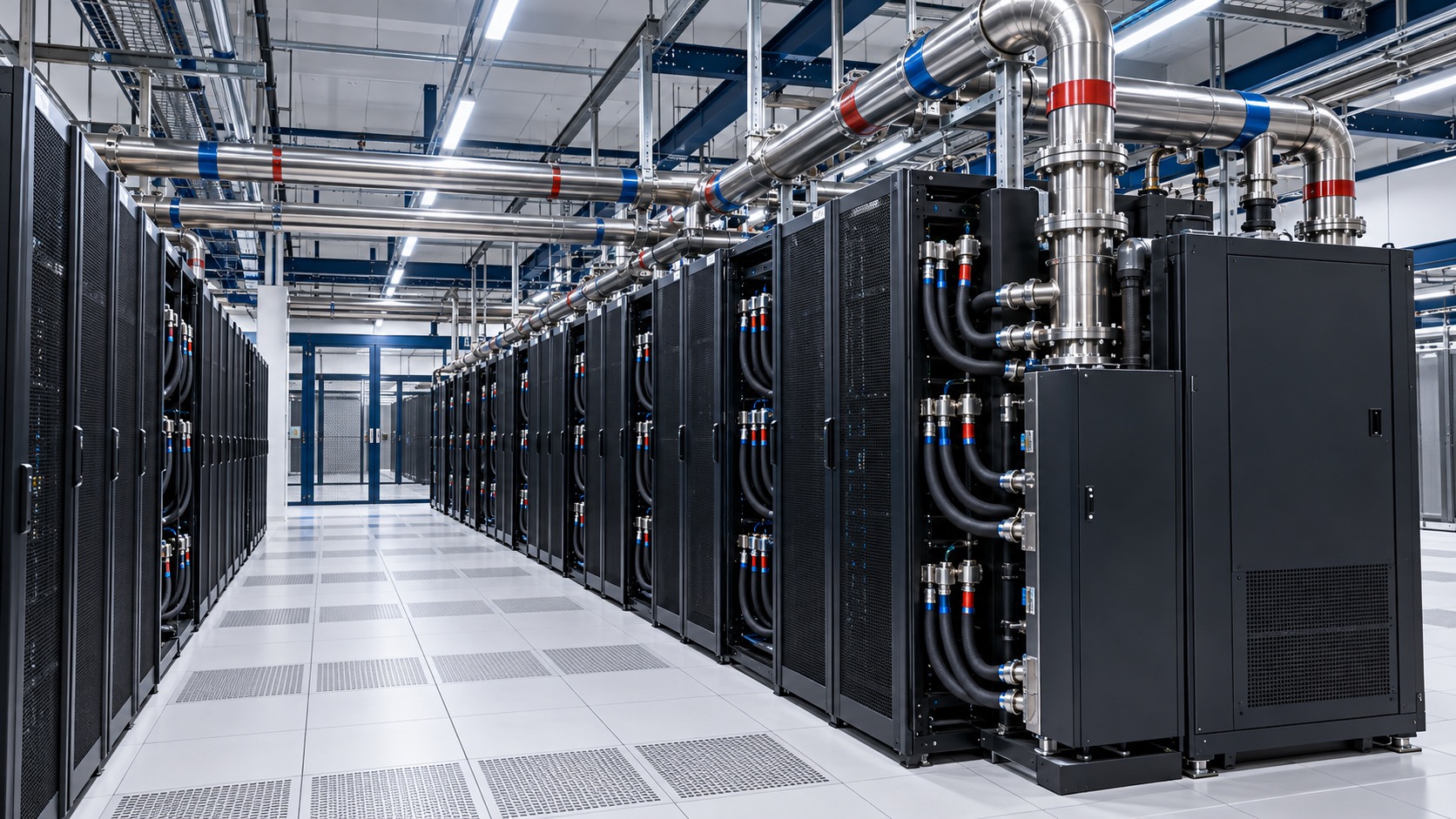
Adapting facilities for artificial intelligence requires a coordinated review of electrical capacity, heat removal and operational continuity.
On 19 October 2026, Imagen Radio published an interview with Alejandro Estúa Belaunzarán, Chief Revenue Officer of KIO Data Centers, about adapting its facilities for artificial intelligence workloads. The written summary links this change to higher power densities and advanced water-based cooling systems. It does not detail the configuration of those systems or provide performance measurements.
Electrical capacity and cooling are planned together
From an engineering perspective, introducing new computing loads requires assessing the facility as a system. The electrical power consumed by equipment is largely converted into heat that must be removed. Reviewing the power supply therefore needs to be accompanied by an assessment of cooling capacity, its distribution and the intended operating conditions. This is Grupo Arcondec’s editorial interpretation; it does not describe KIO’s implemented solution or the requirements of a specific project.
Editorial analysis
Density changes infrastructure decisions
A room’s total capacity alone does not explain where a new load can be accommodated. Its concentration also matters: two facilities with similar total power may have different requirements if one distributes consumption across many cabinets while the other concentrates it in a few positions. Before an expansion, it is useful to understand the expected load per cabinet and zone, the environmental conditions required by equipment and anticipated growth. This information supports a coordinated assessment of power distribution and heat removal, and identifies components requiring adaptation.
Upgrading while the facility remains operational
In an existing data centre, interventions must consider services that remain active. Routes for new installations, maintenance access and work sequencing can affect both scope and programme. Planning needs to establish which systems will support the load at each stage and how the adaptations will be tested before entering operation. Commissioning makes it possible to compare the installation with the intended design conditions and hand over useful information to the staff responsible for maintaining it.
Arcondec’s perspective: an integrated approach
From Grupo Arcondec’s perspective, preparing a data centre for new artificial intelligence workloads begins with assessing existing infrastructure and defining the conditions it will need to support. The scope must coordinate electrical supply, cooling, civil works and control systems alongside operational and maintenance requirements. In an operational facility, this approach also requires planning the transition: identifying dependencies between systems, establishing the intervention sequence and defining the tests needed to incorporate new infrastructure. Installed capacity must be operable, maintainable and capable of meeting the intended design conditions. Arcondec’s editorial interpretation is that AI readiness should be assessed as an integrated capability of the facility. The criteria encompass how much additional load it can receive, how to sustain it during operation, how to maintain the supporting systems and what evidence will demonstrate performance. This perspective is Grupo Arcondec’s editorial analysis of the subject; it does not imply involvement in KIO’s facilities.
Efficiency must be demonstrated in operation
The cooling method alone cannot establish a facility’s water or electricity consumption. Assessing results requires information about system configuration, operating conditions, the load served and the measurement period. Coverage of these adaptations should focus on documented results: capacity actually enabled, thermal performance, resource consumption and maintainability. These data distinguish an intended improvement from demonstrated performance. For a data centre developer or operator, the starting point is to define the adaptations needed to accommodate the new load and maintain it within design conditions. Addressing this requires coordination between disciplines from planning through operation.
Source / access date: 2026-10-19